
Andrej Maihorn
Founder & Principal, Vasuki
I've spent 28 years in commerce and SaaS GTM across three companies, multiple market cycles, and every stage of the growth journey from startup to enterprise. That span isn't tenure for its own sake. It's pattern recognition: I've seen the same positioning gaps, the same analyst relation mistakes, and the same GTM execution breakdowns play out across enough companies to know how to fix them faster than most.
My career has moved deliberately across the full GTM stack, from product architecture and strategy, through analyst relations and market positioning, to building and running North America GTM from scratch. Each company added a layer:
Intershop — 22 years
Built the company's first Product Strategy & Marketing function. Designed the market-to-roadmap governance model, led analyst relations directly with Forrester, Gartner, and IDC, and advanced Intershop to Leader in the Forrester B2B Commerce Wave. Led a 100+ person international program to deliver GSI Commerce (eBay Enterprise) v11 and Intershop 7, the platform that became the foundation for that Forrester Wave Leader recognition. Advised Fortune 500 enterprises including HPE, Danaher, and Lululemon as strategic customers.
Elastic Path — VP Industry Solutions
Led the B2B commerce pivot, connecting product roadmap priorities to vertical-specific GTM motions, building use-case libraries, and strengthening analyst engagement. Doubled analyst engagement frequency and improved win rates 10–20% through clearer use-case positioning and competitive differentiation.
Spryker — VP GTM North America
Built the North America GTM function from ground zero. Designed the operating model across six cross-functional teams, defined the ICP, developed a use-case-based GTM motion and verticalization strategy that drove competitive differentiation, supported the partner-led motion with strategy and execution, and scaled regional pipeline 8x in 12 months, with a +20 point win rate improvement and a 15% reduction in sales cycle time. Actively contributed to Gartner MQ Leader progression.
In early 2026, I launched Vasuki to take that accumulated experience independent, working directly with software and technology vendors at the stage where GTM strategy, positioning, and analyst relations have the most leverage.
The Pattern I Keep Seeing
After 28 years across multiple companies and market cycles, one pattern shows up consistently: software and technology companies grow their product faster than the market understands them. The gap between what a company actually does and how analysts, buyers, and partners perceive it widens quietly, and then starts costing pipeline.
It shows up as analyst positioning that no longer reflects the product. As messaging that varies by team and geography. As a sales team carrying positioning work they shouldn't have to do. As a Niche Player or Challenger placement in a Gartner MQ that doesn't reflect where the product actually competes and wins. As a North America expansion that stalls because the credibility foundation isn't there yet.
Leadership usually identifies it as a pipeline problem, a win rate problem, or a forecast problem, because those are the numbers that surface first. The underlying cause is almost always a positioning gap. That's the work Vasuki is built for.
I've seen this pattern at Intershop, Elastic Path, and Spryker, and I've seen it in the companies I talk to today. The good news is it's fixable. The operating model, the narrative, the analyst engagement program: these are not mysterious. They're buildable, with the right experience and the right process.
How I Work
- Market-back, not slide-first. Every engagement starts from customer, market, and competitive realities, not from a deck. The positioning, the operating model, and the analyst narrative all get built from evidence, not from what sounds good in a conference room.
- Operator mindset. I've run these programs inside companies, not just advised on them from the outside. Recommendations are grounded in what can actually be executed by real teams with real constraints, including budget, bandwidth, and organizational dynamics.
- Systems over one-offs. The goal is never a deliverable that gets filed away. Every engagement is designed to build a GTM or positioning system that can be repeated, scaled, and owned internally after the engagement ends.
- Joint ownership. Engagements are collaborative with internal teams throughout, so the model, the narrative, and the operating cadence outlive the engagement itself.
- Pattern recognition across the full ecosystem. Having worked across vendors at different stages, enterprise customers at different maturity levels, and analyst firms across multiple evaluation cycles, I bring perspective that's hard to develop inside a single company.
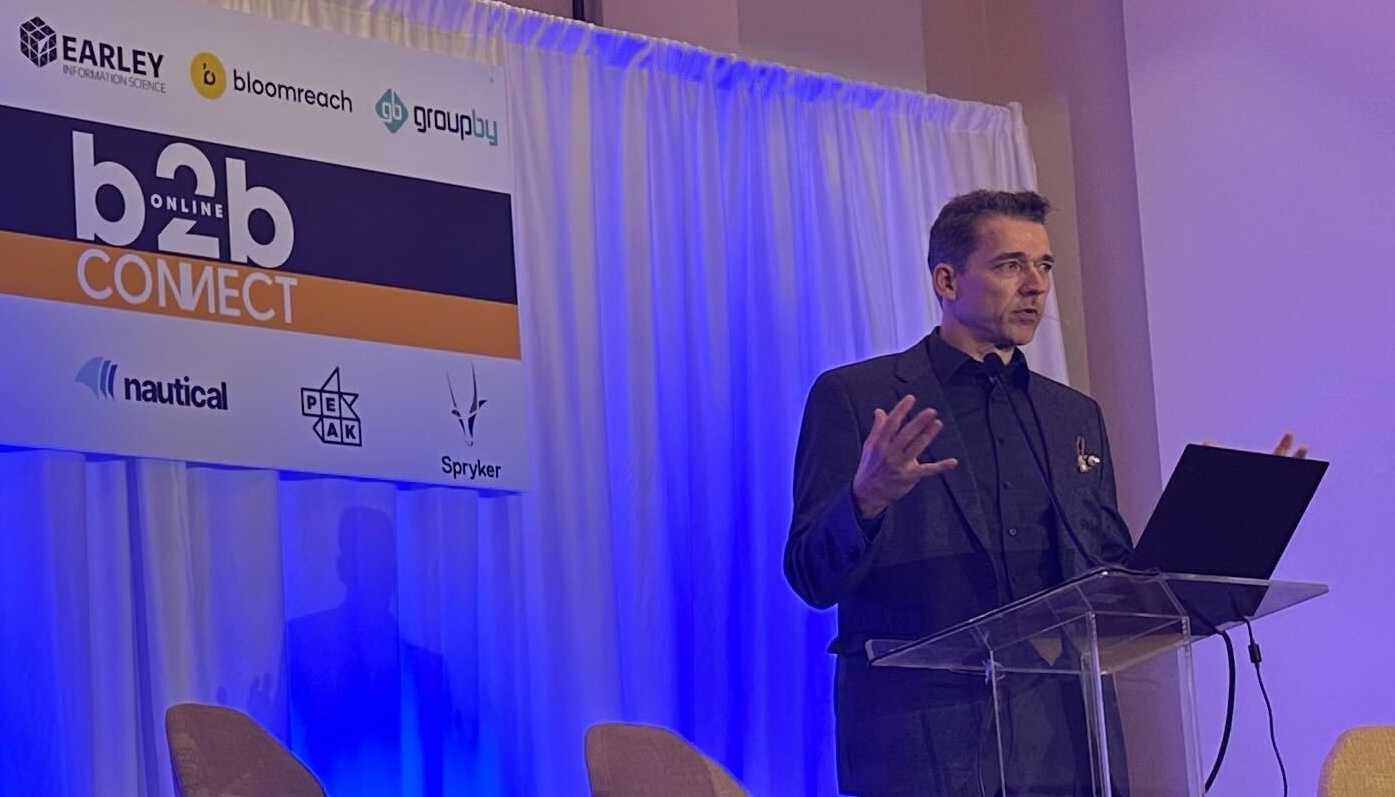
Keynote — B2B Online Connect, 2024 · Keynote — B2B Online Connect, 2023 · Keynote — Spryker EXCITE, 2022 · Keynote — B2B Online, 2019

If the gap is visible from the outside, it's costing you pipeline.
Most engagements start with a short conversation, no pitch, no deck: just a direct discussion of where the positioning gap is and whether Vasuki is the right fit to close it.
Let's Talk